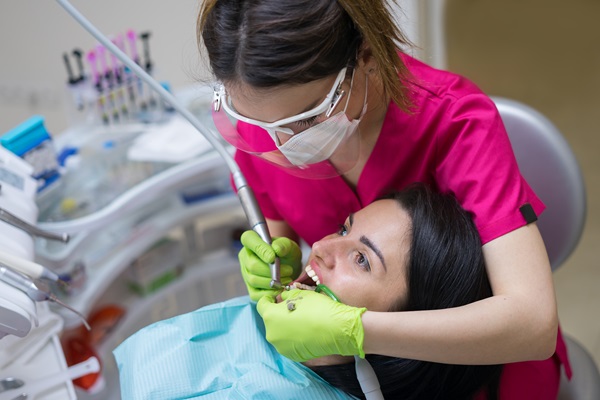
Going to the dental office regularly likely means that the teeth will be cleaned on a routine basis, however, this does not mean that a deep teeth cleaning will be done. A deep teeth cleaning is actually different than the routine one that is done at a check-up. Many patients initially believe that a deep cleaning is required if they have not been to the dentist in awhile or if oral hygiene is not practiced. The need for a deep cleaning depends on one's existing oral health.
When to consider a deep cleaning
The upper portion of the teeth is covered with a thick protective coating called enamel. The lower parts of the teeth do not have the same level of protection because the gums and bone generally cover them. However, periodontal disease can attack and irritate the gums at the base of the teeth. Unfortunately, periodontal disease often results in gums that pull back or recede down the teeth. This exposes a weaker part of a tooth for potential infection or damage.
As the gums pull away from the teeth, they create small pockets. As the periodontal disease continues or progresses, the pockets can grow in size. This means that more of the tooth is exposed, and more harmful bacteria can hide in these pockets.
Untreated, periodontal disease can lead to deep gum recession or even bone loss. If the issue becomes too severe, the dentist may suggest a tooth extraction, or the teeth may become loose and fall out independently.
While brushing and flossing can help keep periodontal disease from getting established, a deep teeth cleaning is required once the pockets have been created.
Dentists use a two-part approach to deep cleaning. These are called scaling and root planing.
The scaling portion of the procedure occurs when the dental staff clean away all of the plaque and tartar that has accumulated at the base of the tooth and down into the pocket. While brushing can help to reduce the amount of plaque, tartar has hardened to the tooth and requires professional intervention.
After the teeth and pockets have all been scaled, the hygienist will then plane the teeth. Planing a tooth makes the clean surface of the tooth smooth. This is necessary so that new bacteria cannot get into small grooves or crevices. This allows for the gums to reattach to the tooth.
How to care for the gums after a deep cleaning
Although the teeth and gums will not have any bacteria or buildup, the gums will likely feel sensitive and possibly a little swollen after a deep teeth cleaning. Additionally, it is critical to be careful with the gums when brushing during this period. It would be best to allow the gums to reattach to the teeth without continually pulling them off by brushing too hard. Remember, one should not avoid brushing because there will be a buildup of bacteria that can derail the entire process. Work closely with the dentist to determine the best way to care for the teeth after the procedure.
Request an appointment here: https://www.northcoastfamilydental.com or call North Coast Dental Implants & Cosmetics at (760) 705-3407 for an appointment in our San Marcos office.
Check out what others are saying about our services on Yelp: Deep Teeth Cleaning in San Marcos, CA.
Related Posts
Unlike other body organs, your teeth cannot regenerate when damaged. Therefore, you will need to repair the teeth with synthetic materials to have a full-functioning smile. Here are some tips from a family dentist to help maintain proper oral care to preserve the only set of natural teeth you will ever have.Brushing removes plaque, a…
Missing teeth can be a nuisance, whether their absence interferes with speech or makes it hard to eat the foods that you love, but thankfully, a dental implant can be a highly effective method of restoring your smile and bite after losing one or more teeth. While it is true that dental implants are not…
A family dentist is a type of dental practitioner who provides numerous services to patients of all ages. This type of dentist is specially trained to treat children, adults, and seniors and can help with various dental issues, from routine cleanings to complex restorative procedures. This blog post will discuss the types of services offered…
Your family dentist can help you regain your dental health. Dental damage or tooth loss can make eating and speaking difficult. Finding the right dental restoration is possible. Here are the details about the restoration options that you can get from your family dentist.Bacteria eat away the enamel layer of teeth, which results in cavities.…